Calling drag “womanface” only works if women have a face, and the people saying it have spent years telling me they don’t.
This week I watched a TikTok from a creator who was rightly losing her mind because people are comparing drag to blackface. She blamed homophobes, and they’re part of it. But the line is older than that. In 2000, a law review essay was titled, no joke, “Drag = Blackface.” Radical feminists like Sheila Jeffreys have used the comparison for years against trans women. These days it’s the gender-critical crowd on X slapping the label on a picture of Tom Daley in a dress he knitted himself.
I have an odd connection with drag. My introduction to the LGBT community in Indianapolis started at Club Cabaret, a drag bar at 15th and Capitol that closed around 2005. Then The Ten, a lesbian bar. Club Cabaret was the first place I explored my own femininity. For me, drag was about community. People I loved were drag queens.
But when cis straight people bring up drag with me, it’s usually because they’re trying to fit my transition into something they already know. Even people I’ve worked with have brought up a drag show to start a conversation about me. For years it was RuPaul’s Drag Race. “Oh, I love Drag Race!” Great. That’s the guy who appropriated the T word, and I wrote about it at the time. RuPaul isn’t all that drag is.
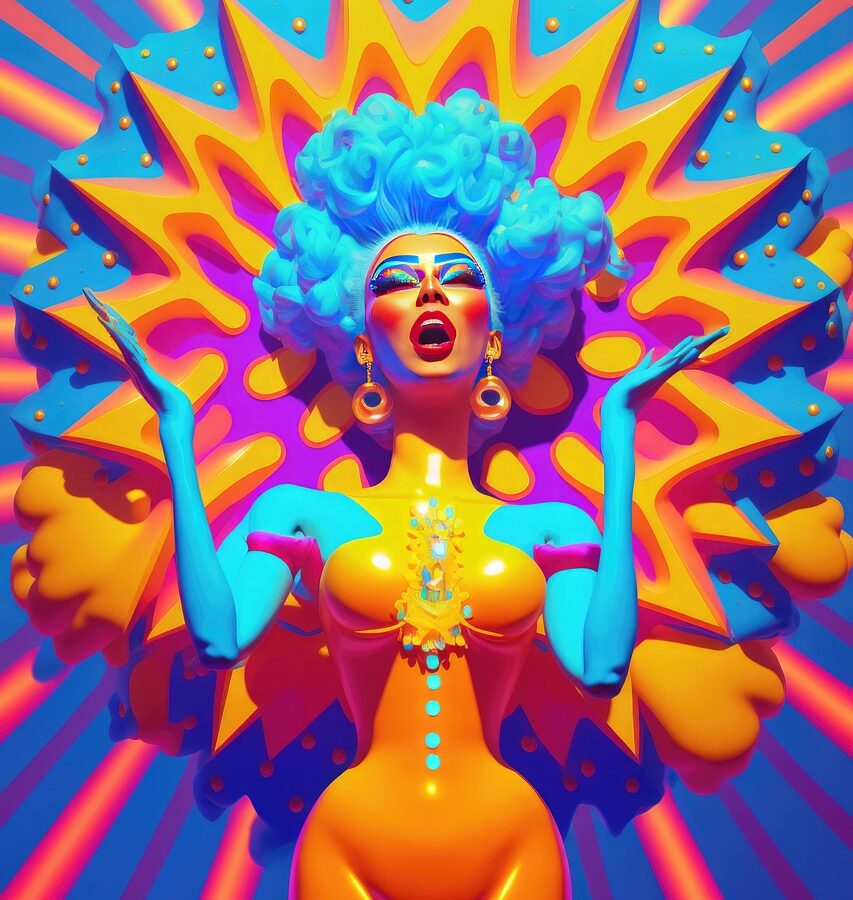
Here’s what they miss. Drag is hyperfemininity, usually. It’s performance art, and a lot of the time it’s a performance about gender performance. My life isn’t that. Femininity is a spectrum, and putting a drag queen and me in the same box is like saying an opera singer and someone humming in the kitchen are doing the same thing. Technically, they’re both singing. One is a show. The other is just living.
Now the contradiction. This is the same crowd that tells trans women we don’t need to transition: just be a feminine man, wear the dress, nobody’s stopping you. Then a man actually wears the dress, on stage, and suddenly it’s womanface. They say a dress doesn’t make you a woman. So why is a man in a dress an impression of one?
Can drag be misogynistic? Sure. Some acts are, the same way some comedy is racist. But that’s down to the act, not the art form. Blackface was insulting by design: people with power mocking the people they oppressed. Drag came out of people who had to hide it to avoid persecution. And saying drag is inherently misogynistic is, ironically, misogynistic itself, because it says being a woman has a certain face.
They’ll tell you they don’t hate femininity, they hate stereotypes forced on women. That’s exactly what you’re doing. My presentation isn’t 100% feminine. There are masculine parts of it too. I never wanted to be a doll, and I most certainly am not. So by your own definition I’m doing exactly what you told me to do, and I’m still a fraud to you. With these people there’s no right way to be trans and no right way to be feminine. It was never about stereotypes. It’s a hatred of femininity.
What I’ve got isn’t a caricature. It isn’t an extreme. There’s femininity in how I present, but it’s not all that I am. I just want to live as close to the expression of who I am as I can.
So to anyone calling drag womanface, I’ve got one question: what does a woman LOOK like?